Vinyl Hour!
Double Fantasy - Geffen Records, 1980

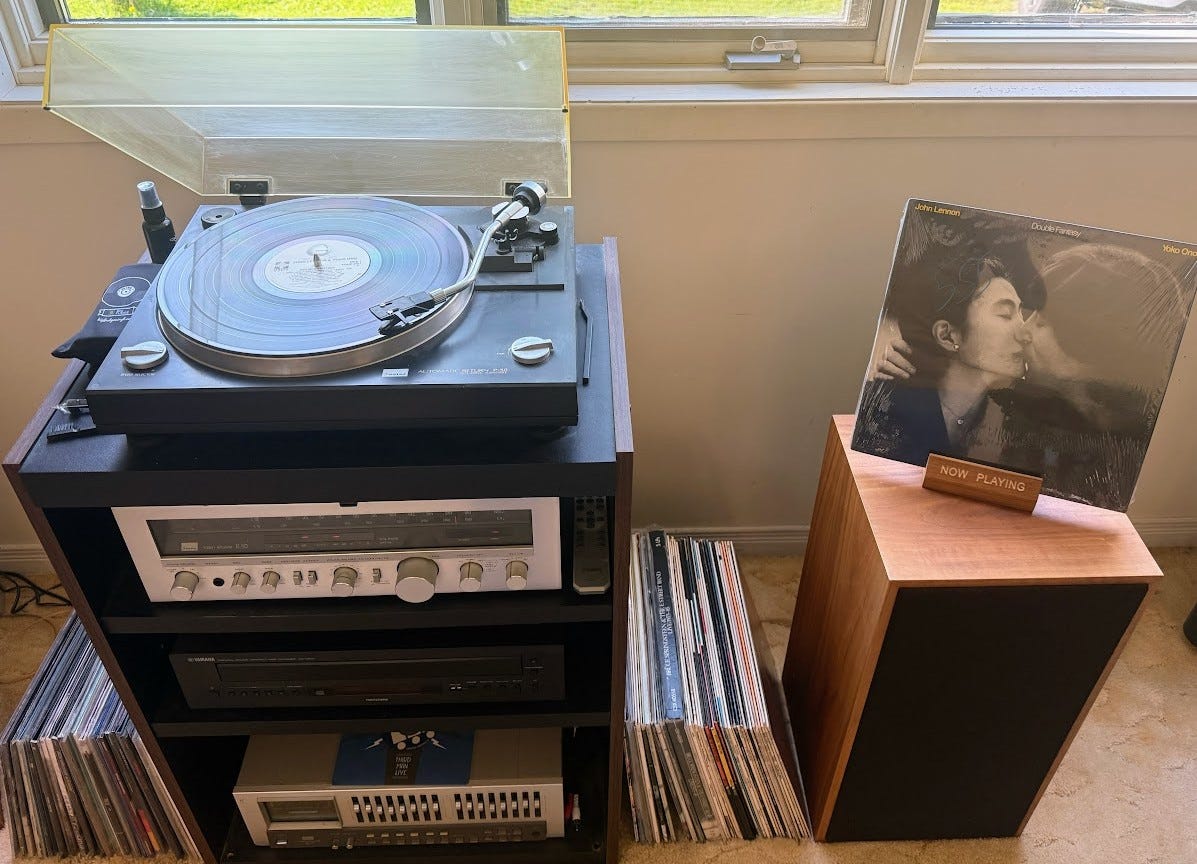
"Before you cross the street
Take my hand
Life is what happens to you
While you're busy
Making other plans"
—from Beautiful Boy (Darling Boy), lyrics by John Lennon
I bought Double Fantasy about a week before John Lennon died. I remember walking home from my shift as a grocery clerk at Dominion, stopping at Mac’s Milk for a Coke, and thinking I heard on the store radio that Lennon had been shot. I asked the cashier if that’s what I’d just heard, but he had no idea. As soon as I stepped into my apartment, my dad confirmed the devastating news. Through tears, I could only whisper, “Who would shoot John Lennon?”
The comeback album became a farewell album. Unlike most collaborations, it alternates songs between John and his wife Yoko track by track—a musical conversation about love, domestic life, and identity. Instead of grand statements, Lennon writes about baking bread, raising a child, and marital tension—radically ordinary subject matter for this revolutionary Beatle.
The Lennon songs are extraordinary—still underrated, in my view. Watching the Wheels is his clearest statement of withdrawal from fame and peace with it: gentle, reflective, quietly defiant. Beautiful Boy is a gorgeous lullaby for Sean, with that immortal line: “Life is what happens to you / While you’re busy making other plans.” (Just Like) Starting Over leans into a retro sound that signals a new beginning after five silent years, while Woman features a beautifully tender vocal—warm, vulnerable, and intimate.
I have to admit, I wasn’t a fan of Yoko’s songs when Double Fantasy first came out. But listening now, they’re more structured than usual, less wild, and surprisingly compelling. Where I once skipped them, I now appreciate how they shape the album’s conversational, heart-play dialogue—a concept that was original at the time and influential on the genre.
It’s ironic—after years of mocking Paul’s “fairy tales and granny music,” John dove in and wrote a domestic love album. And what an album it is. On Double Fantasy, he favors intimacy over mythology, shedding the “Beatle” persona to reveal a husband and father. The back-and-forth with Yoko adds tension, contrast, and realism—love as dialogue, not fantasy. There’s a sense of renewal throughout, a feeling that life is beginning again—not ending. Tragically, it did end.
Heartbroken over John’s death, I never removed the cellophane—except to slip the record out—and didn’t play it for many months. It’s the only one in my collection that still has its original wrapping.
Where were you when you heard the sad and tragic news that the great man had died?
If this sparked a memory or brought a smile, subscribe and join me Monday–Friday as I rediscover the vinyl that shaped my life.
I was in 7th grade, which I remember because I had bought the 45 of “Starting Over” as a gift for my friend Robin’s 13th birthday party. I’m not a Yoko hater, but I have to admit I still wish this was an all-Lennon album. Some of his best solo work, which makes you think about where he would have gone next.
Somehow I only heard the news on the way home from school the day after. To this day I don’t understand how nobody was talking about it at school. But then again I was only nine years old at the time and maybe there weren’t many Beatles/Lennon fans amongst my peers. I still remember exactly where I was when the news came on the radio. Devastating.