Vinyl Hour!
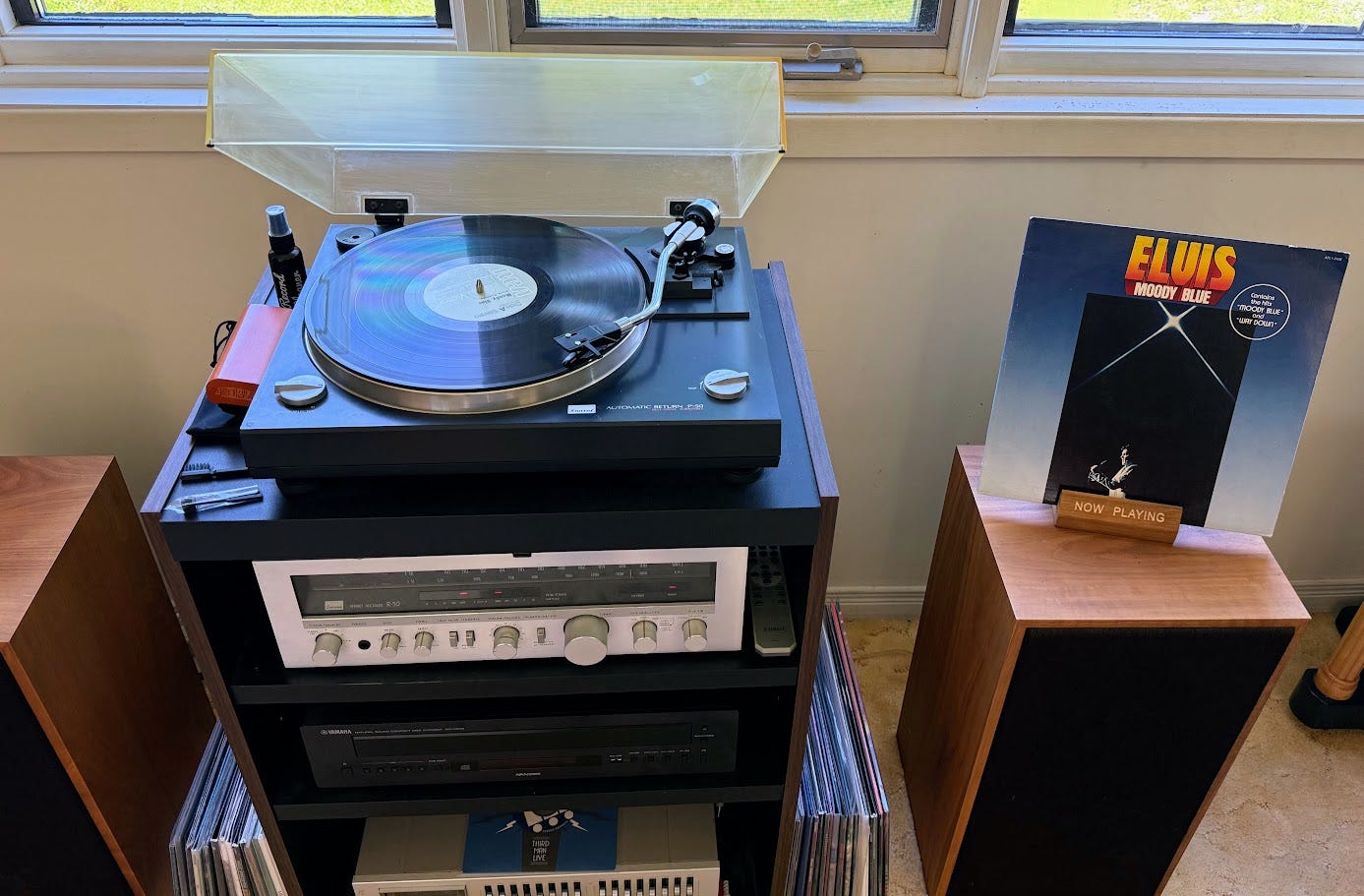
Moody Blue - RCA Records, 1977

"Time goes by so slowly
And time can do so much
Are you still mine?
I need your love, I need your love
God speed your love to me"
—from Unchained Melody, lyrics by Hyman Zaritsky
Released July 19, 1977, Moody Blue was Elvis Presley’s final studio album released during his lifetime, arriving less than a month before his death on August 16, 1977. It’s a strange, moving, often haunting record: part studio album, part live album, part exhausted artifact, and part reminder that even near the end, Elvis could still summon flashes of greatness.
Much of Moody Blue was recorded in Graceland’s famed Jungle Room after Elvis, increasingly withdrawn by 1976, no longer wanted to travel to Nashville studios. Instead, RCA brought the studio to him. Songs like Moody Blue and She Thinks I Still Care emerged from these intimate home sessions, but producer Felton Jarvis still struggled to assemble enough usable material, leading him to complete the album with a small number of live recordings from his final tour period. The result is a fragmented, deeply atmospheric album whose patchwork nature gives it much of its ghostly power.
That atmosphere is present from the title track onward. Moody Blue became Elvis’s final No. 1 country hit, and it’s easy to hear why. The song has an easy, rolling groove, and Elvis sounds surprisingly relaxed and engaged, delivering one of the strongest studio vocals of his final years. Beneath the polished surface, though, there’s still a trace of weariness that gives the performance extra depth.
Way Down was a major hit, reaching No. 1 in the UK posthumously, and it remains one of the album’s undeniable highlights. Driven by its dark groove and J.D. Sumner’s impossibly low bass vocal, Elvis attacks the song with real energy and swagger. It’s one of the clearest reminders that flashes of greatness were still there near the end.
Unchained Melody, recorded live, is perhaps the album’s most emotional moment. Elvis’s health was visibly declining by this point, and in the now-famous footage from Rapid City, South Dakota—seated at the piano, bloated, exhausted, and clearly struggling physically—the contrast is heartbreaking. Yet once he begins to sing, the voice somehow rises above the circumstances with astonishing power and vulnerability. As a lifelong Elvis fan, watching him fight through the performance and still reach those climactic notes, even managing a small smile at the end, is incredibly moving. It’s one of the most haunting and human moments of his career.
Critics initially greeted Moody Blue with mixed reviews, pointing to its uneven blend of studio recordings and live performances and its assembled, almost improvised feel rather than the cohesion of a fully realized album. Over time, however, its reputation has deepened. What once seemed fragmented now feels poignant—less a polished statement than a final transmission from an artist in visible decline but still capable of startling emotional power. Heard today, the album carries an almost unbearable weight: Elvis exhausted, fragile, and fading, yet still summoning flashes of vocal brilliance that remind you exactly why he mattered in the first place.
What do you hear in Elvis’s voice on this album, at the end of everything?
If this sparked a memory or brought a smile, subscribe and join me Monday–Friday as I rediscover the vinyl that shaped my life.
You can also read my essay on Elvis’s early recordings, The Sun Collection