Vinyl Hour!
Centerfield by John Fogerty — Warner Bros. Records, 1985

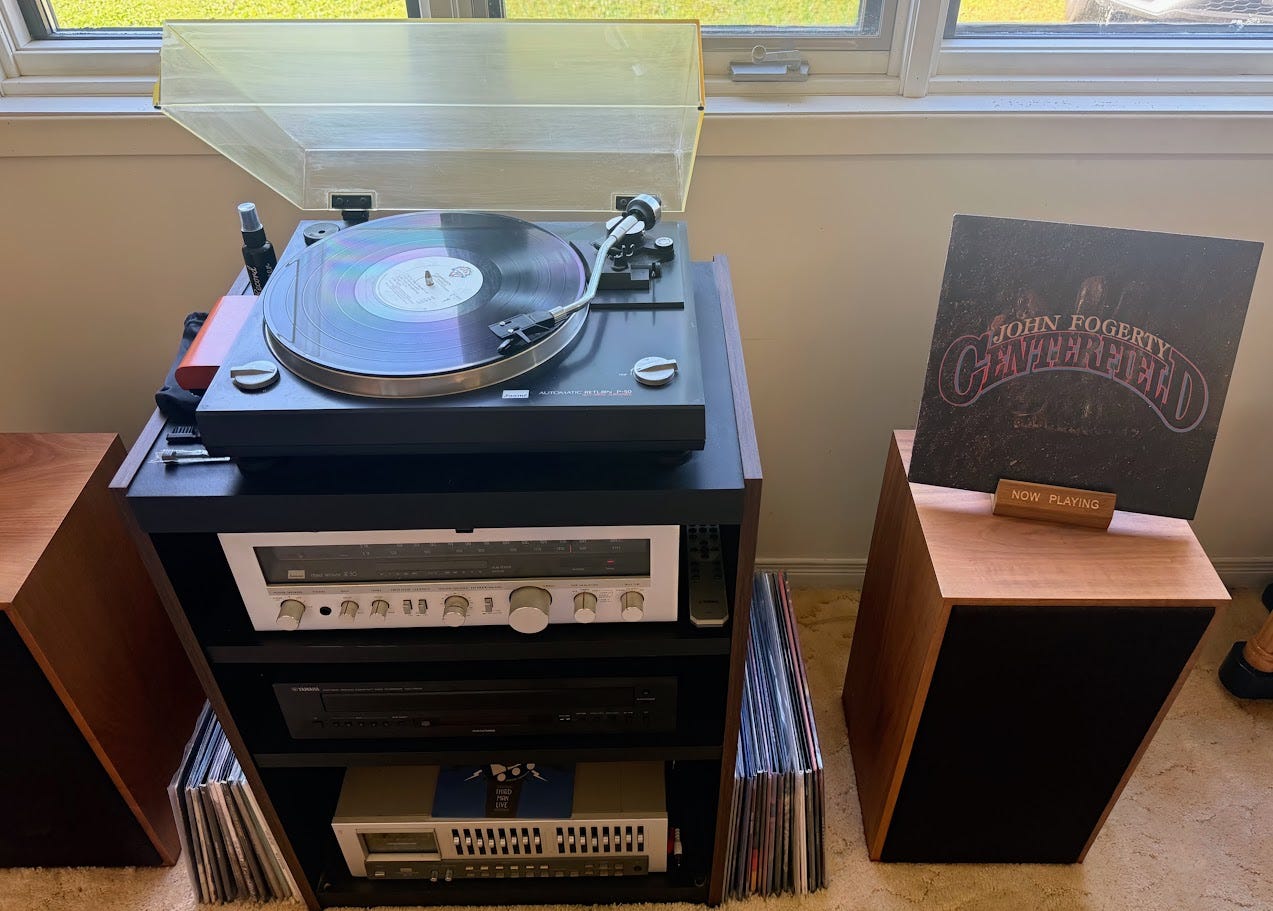
"Well, beat the drum and hold the phone
The sun came out today
We're born again, there's new grass on the field
A-roundin' third, and headed for home
It's a brown-eyed handsome man
Anyone can understand the way I feel"
—from Centerfield, lyrics by John Fogerty
Many of you know by now that I’m a huge Creedence fan. Centerfield was John Fogerty’s great solo comeback album after nine years of relative silence. Worn down by legal battles, label disputes, and a deep disillusionment with the music business, Fogerty largely withdrew from public musical life between 1975 and 1985. Then he came roaring back with Centerfield, a confident, hit-filled album that became the biggest success of his solo career.
The title track, Centerfield, gets my vote for the greatest sports song ever recorded. An irresistibly joyful celebration of baseball, dreams, and second chances, it transcended rock radio to become a permanent fixture in ballparks across North America. Driven by one of the most recognizable guitar riffs of the 1980s—simple, bright, and instantly memorable—the song also serves as a perfect metaphor for Fogerty's own return to the game: stepping back up to the plate after years in the wilderness and knocking one out of the park.
Amid years of record-company acrimony and legal battles, label owner Saul Zaentz even sued Fogerty, claiming The Old Man Down the Road plagiarized Run Through the Jungle—essentially arguing that Fogerty sounded too much like himself. Fortunately, Fogerty won the case. He wasn't as lucky with Zanz Can't Dance, his biting attack on Zaentz that included the memorable line, “Zanz can't dance, but he'll steal your money.” The song was eventually retitled Vanz Kant Danz after legal pressure.
I also love Big Train (From Memphis), Fogerty's affectionate tribute to Elvis Presley, whose influence can be heard throughout the Creedence sound. Rock and Roll Girls is a catchy, radio-friendly rocker that helped introduce Fogerty to a new generation of listeners. As always, Fogerty's songwriting shines on I Saw It on T.V., a poignant reflection on America, television, and the civil rights era. Beginning with personal memories and expanding into a broader historical perspective, it's one of the album's most moving—and most overlooked—songs.
The consensus today is that Centerfield is Fogerty's finest solo album and one of the greatest comeback records in rock history. Critics have praised its songwriting, energy, and consistency, while fans embraced it as the closest thing to a classic Creedence album without actually being Creedence. On a personal level, I was thrilled when it finally arrived. After nearly a decade of silence, it felt as though Fogerty had vanished from the face of the Earth—only to return with an album packed with unforgettable songs and a reminder of just how great he was.
After nine years away, Fogerty came back with Centerfield. Which artist's comeback meant the most to you?
If this sparked a memory or brought a smile, subscribe and join me Monday–Friday as I rediscover the vinyl that shaped my life.
For me, Bruce Dickinson's return to Iron Maiden was the most satisfying comeback. Neither had actually gone away, but the reunion seemed like a rebirth of the band with a renewed creativity that turned out to carry them strongly right up to now.
Genius to write a baseball song that gets played at every ballpark every night!