Vinyl Hour!
Give the People What They Want - Arista Records, 1981

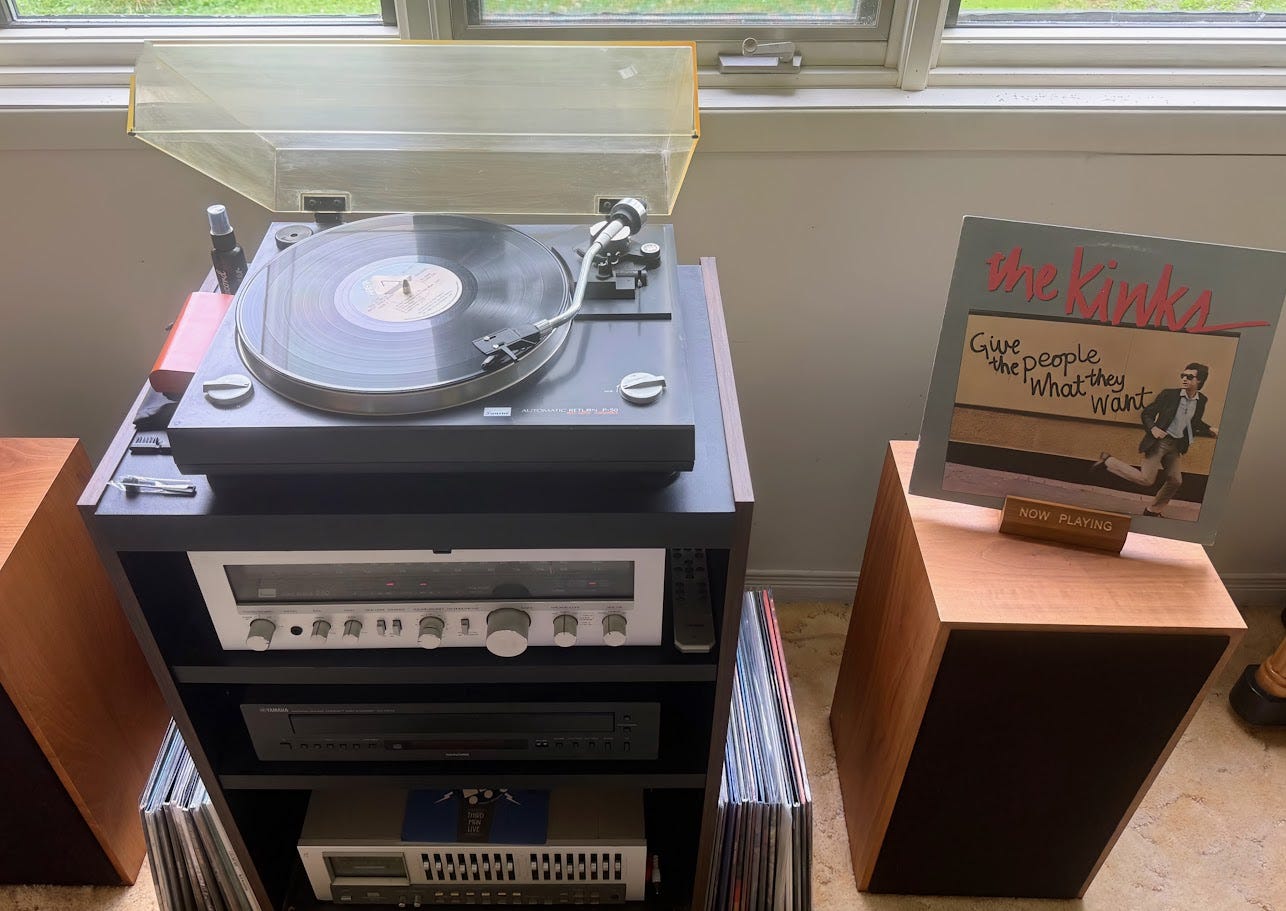
"Silly boy, you got so much to live for
So much to aim for, so much to try for
You're blowing it all with paranoia
You're so insecure, you self-destroyer"
—from Destroyer, lyrics by Ray Davies
The Kinks kicked off the ’80s with Give the People What They Want, an aggressive, hard-rocking album that channels the energy and attitude of punk. It became one of their biggest late-era U.S. successes, driven by arena-rock punch and the hit Destroyer, which cleverly revisits the riff and lyrical world of All Day and All of the Night.
Ray Davies balances cynicism and tenderness brilliantly here—pairing snarling takes on modern life like Destroyer with the bruised humanity of Better Things. The album captures anxiety, media overload, and the struggle to stay human in a loud world, while Dave Davies delivers a crunchy, aggressive guitar sound that feels remarkably modern for a band nearly two decades in.
Other standouts include the title track, a sharp-edged satire of politics, media, and mass appetite delivered with arena-rock swagger. Around the Dial is a heartfelt love letter to radio culture and musical obsession, capturing both the loneliness and companionship of listening late at night. And Art Lover remains one of Ray Davies’ most misunderstood songs—less a literal narrative than a melancholy character study about loneliness, aging, and emotional disconnection, told through the voice of an uneasy narrator.
I remember reading that Bruce Springsteen loved this album and deeply admired Ray Davies’ songwriting. I always imagined Bruce covering an earlier Kinks working-class classic like Dead End Street, but in 2010 he instead joined Ray for a moving duet of Better Things on See My Friends. It feels less like a guest spot than two master songwriters recognizing each other across generations. Until Bruce came along, the Kinks—alongside the Who—were my favourite band.
Give the People What They Want helped cement the Kinks’ unlikely second life in America, where they suddenly found themselves thriving in the FM-rock era. It’s now regarded as one of the strongest late-period Kinks albums, alongside Low Budget and State of Confusion, with Better Things emerging over time as one of Ray Davies’ most beloved songs.
The record has always been a personal favourite of mine—another reminder of just how creative, original, and singular Ray Davies was as a songwriter.
Which Kinks era do you return to most: the raw early classics, the concept-album years, or the arena-rock years?
If this sparked a memory or brought a smile, subscribe and join me Monday–Friday as I rediscover the vinyl that shaped my life.
You can also read my essays on the Kinks albums Arthur and One For the Road
One of my favorite bands. Some Kinks fans argue over which period is the best. For me all their phases matter and offer something. I kept up with them from the 60s into the Arista era, then I got busy and lost track. Years later I caught up with everything they did till the very end and it's all satisfying.
The Kinks’ late 70s/early 80s run was the stuff I grew up with and holds a special place in my heart, regardless of whether it was or wasn’t their “best.”