Vinyl Hour!
Killer by Alice Cooper — Warner Bros. Records, 1971

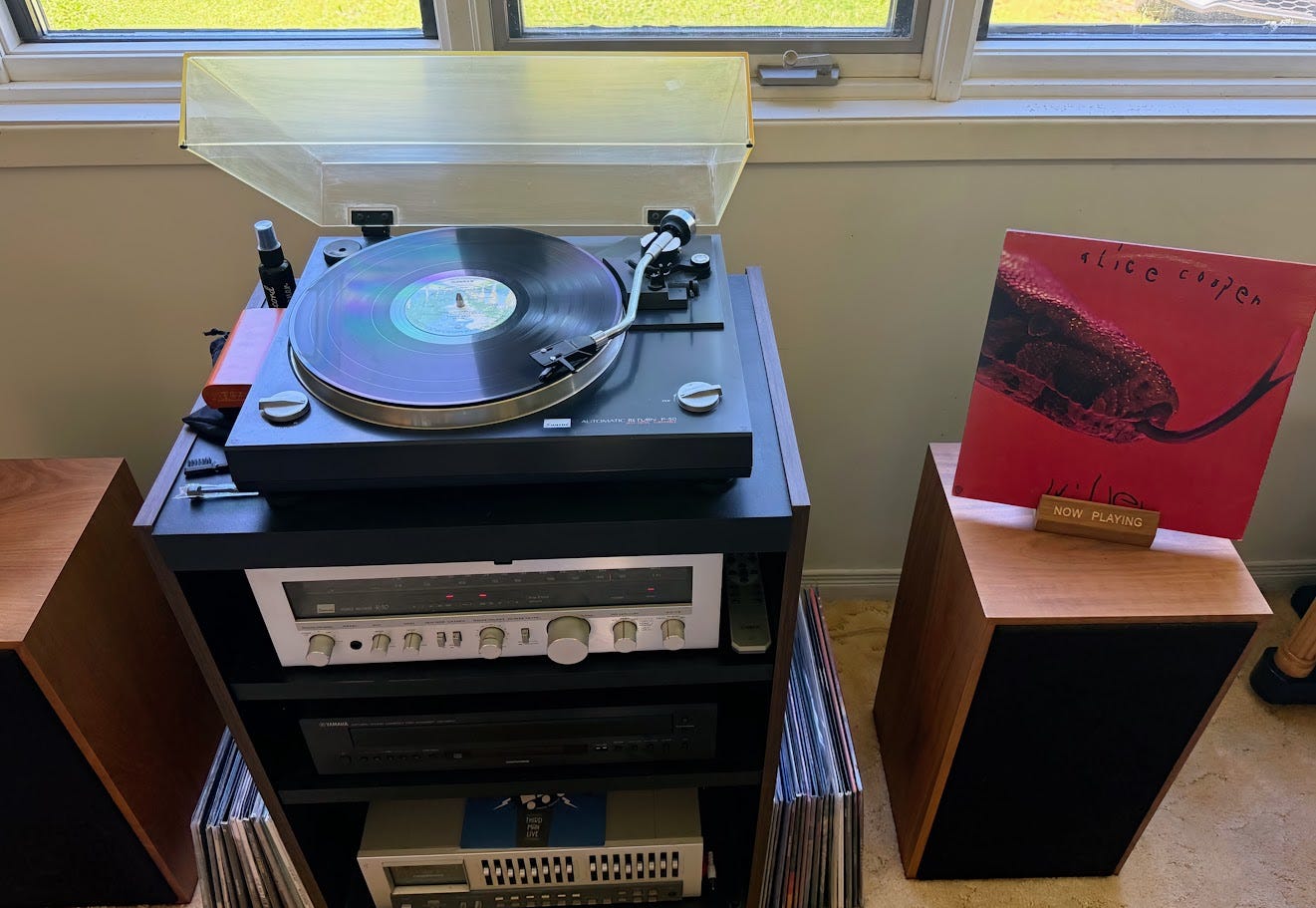
"I told her that I came from Detroit City
And I played guitar in a long-haired rock and roll band
She asked me why the singer's name was Alice
I said 'Listen baby, you really wouldn't understand'"
—from Be My Lover, lyrics by Michael Bruce
Alice Cooper’s shock-rock classic Killer built on the breakthrough success of Love It to Death and helped transform the band from rising stars into one of rock’s most exciting acts. While many people associate Alice Cooper’s ascent with School’s Out, it was Killer that fully established the dark theatrical persona, macabre storytelling, and elaborate stagecraft that would soon make the band superstars.
Without Killer, Cooper might have remained more closely defined in the public mind by I’m Eighteen. Instead, the album confirmed the band’s momentum, paved the way for the blockbuster success of School’s Out and Billion Dollar Babies, and cemented Alice Cooper as a major force in 1970s rock.
Dead Babies and the title track Killer were highly controversial—and it’s easy to see why. Many critics and parents’ groups focused on the shock value, but Dead Babies is widely interpreted as a tragic, exaggerated portrait of abuse and neglect rather than a celebration of it. Meanwhile, Killer pushed the band’s dark theatrical vision even further with its chilling tale of obsession and murder. Like much of Cooper’s work, the reaction often came from the surface shock, while the underlying intent was overlooked.
Other standout tracks include Desperado, Under My Wheels, and Halo of Flies. Desperado is a haunting, cinematic ballad unlike anything else on the album. Cooper’s vocal is surprisingly tender and vulnerable, and the song unfolds like a lonely Western crossed with a funeral march. With its sweeping arrangement and sense of doomed grandeur, it rises above the typical rock ballad.
One of the great hard-rock openers of the early 1970s, Under My Wheels is pure rock-and-roll adrenaline—fast, swaggering, and packed with attitude. Halo of Flies stretches out over eight minutes of twists and tempo changes, blending spy-movie intrigue, progressive-rock experimentation, and hard-rock muscle. Partly inspired by bands like King Crimson, it was designed to showcase the band’s musicianship and remains one of their most ambitious recordings.
What I love about Killer—and these early Alice Cooper records in general—is how grounded it all feels. The dark themes, wild characters, and theatrical touches never come across as artificial or calculated. They’re carried by a band locked into hard rock grooves, tight riffs, and striking, almost cinematic imagery, which gives everything a strange sense of authenticity.
It doesn’t feel like shock for shock’s sake at this stage. Instead, there’s a tension between gritty rock performance and theatrical darkness that makes it all feel believable—less like a concept being performed, and more like rock music pushing into uncomfortable territory with real energy and conviction.
Among serious fans and critics, Killer is usually ranked in the top three of the original Alice Cooper band’s albums (1969–1974), alongside Love It to Death and Billion Dollar Babies. Some even place it at number one, as it balances the raw garage-rock energy of Love It to Death with the darker sophistication and theatrical reach that would peak on Billion Dollar Babies. John Lydon (Johnny Rotten) has called it one of the greatest rock albums ever made, a testament to its enduring power and influence.
Do you hear Killer as shock and theatre, or as a great rock band simply pushing into darker territory?
If this sparked a memory or brought a smile, subscribe and join me Monday–Friday as I rediscover the vinyl that shaped my life.
Click the link to read my previous essay on Welcome to My Nightmare.
This album really turned my head at the time, and your description of the stylistic elements is right on the money.
My favorite Alice Cooper album, without question. So good.